
Commercial real estate transactions are more complex than residential deals. The property often comes with tenants, leases, operating history, zoning restrictions and physical systems that all affect its value. Commercial buyers also generally have fewer built-in disclosure protections than residential buyers, which places more of the responsibility for finding problems on the buyer.
That is what the due diligence period is for. It gives you time to investigate the property before you are fully committed to closing. For investors, business owners and developers buying in Miami, Coral Gables and across South Florida, here is what a thorough commercial real estate due diligence review should cover.
Start With the Due Diligence Period Itself
Your purchase contract sets the rules for due diligence. Before you sign, make sure you understand:
- How long the due diligence period lasts and when it begins
- What inspections, tests and document requests the seller must allow
- Whether you can terminate during the period and on what grounds
- When your deposit becomes nonrefundable
These terms are negotiated, and they matter. A period that is too short or a termination right that is too narrow can leave you deciding on a closing without the information you need. It is critical to keep a checklist for every contract deadline.
Financial Records
For an income-producing property, in addition to the property itself, the financials comprise part of the investment and the analysis. Request and review:
- The current rent roll
- Operating statements for recent years
- Common area maintenance reconciliations
- Property tax bills and insurance costs
- Service, maintenance and management contracts that may continue after closing
Compare the seller’s figures against the leases and bank records where possible. Projections are useful, but the actual history is what supports your price.
Lease Agreements
Read the leases themselves, not just a summary. Lease terms can affect value in ways a rent roll does not show, including renewal options, rent concessions, exclusive use clauses, termination rights and any tenant right to purchase the property.
Tenant estoppel certificates are also an important tool. A tenant estoppel is a signed statement from the tenant confirming the key terms of its lease such as the rent it pays and whether it believes the landlord is in default.
Title and Survey
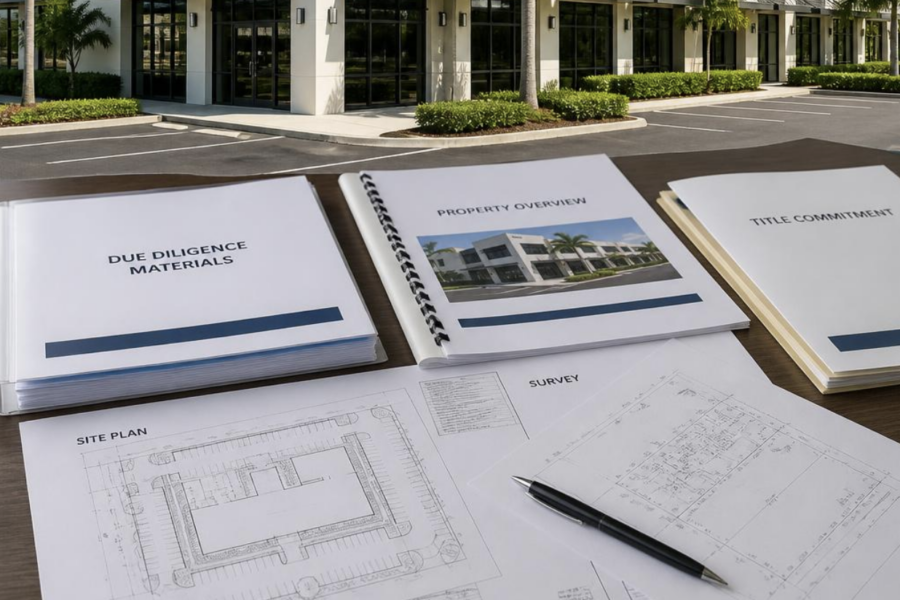
The title commitment shows who owns the property and what affects that ownership, including but not limited to, mortgages, liens, easements and recorded restrictions. Each listed exception should be reviewed to determine how they affect the use and operation of the property..
A current survey shows the property’s boundaries, improvements, easements and any encroachments. Together, the title and survey review help confirm you are buying exactly what you think you are buying. Buyers also run municipal lien, open permit and code violation searches, since those issues can follow the property to a new owner.
Zoning and Land Use
Confirm that the property’s current use is permitted under local zoning, and that any plans you have for the property are allowed as well. Review certificates of use or occupancy, parking requirements and any conditions tied to prior approvals.
If the current use is legally nonconforming, it is critical to understand how that issue will affect the property and your future use, as well as whether that status may be lost, such as a change in use or an extended vacancy. Zoning rules vary across municipalities and counties County municipalities, so ensure that you verify.
Physical Condition
A property’s physical condition assessment looks at, among other things, the building’s structure, roof, mechanical systems, electrical systems, plumbing and parking areas. The report can help you estimate near-term and long-term repair and replacement costs and plan your budget.
In South Florida, buyers of older buildings should also ask about local building recertification or safety inspection requirements, along with roof age, wind resistance and flood exposure. These issues can affect both repair costs and insurance availability.
Environmental Risk
Environmental contamination can be costly to address, and responsibility for it can follow ownership of the property. A Phase I Environmental Site Assessment reviews the property’s history and current conditions to identify potential concerns, such as former gas stations, dry cleaning operations, or industrial uses.
A Phase I is also an important step in preserving certain protections available to buyers under federal environmental law. If the Phase I identifies a concern, further testing may be recommended before closing.
Deal Structure
Buyers should also decide early which entity will take title, since that choice can affect liability, financing and future planning.
When Due Diligence Finds a Problem
Finding an issue does not always mean the deal is over. Depending on your contract and what you discover, options may include renegotiating the price, requesting a seller credit, requiring repairs before closing or terminating within the due diligence period. The key is making that decision while you still have the right to make it.
Guidance You Can Rely On
Tryson Law represents buyers, investors and business owners in commercial real estate transactions throughout Miami, Coral Gables and South Florida. From reviewing the purchase contract to coordinating title insurance and closing, our team helps you understand what you are buying before you commit. Let us help you navigate Florida’s real estate laws with confidence.
Frequently Asked Questions
How long is a commercial due diligence period?
There is no standard length. The due diligence period is negotiated and often depends on the property type, the number of tenants and whether financing is involved.
Do I need a Phase I Environmental Site Assessment?
A Phase I is commonly recommended for commercial purchases and is often required by lenders. It helps identify potential contamination and supports certain buyer protections under federal law.
Can I cancel a commercial purchase during due diligence?
It depends on your contract. Many commercial contracts allow the buyer to terminate during the due diligence period, but the terms, deadlines and deposit consequences vary. Review them carefully before signing.